
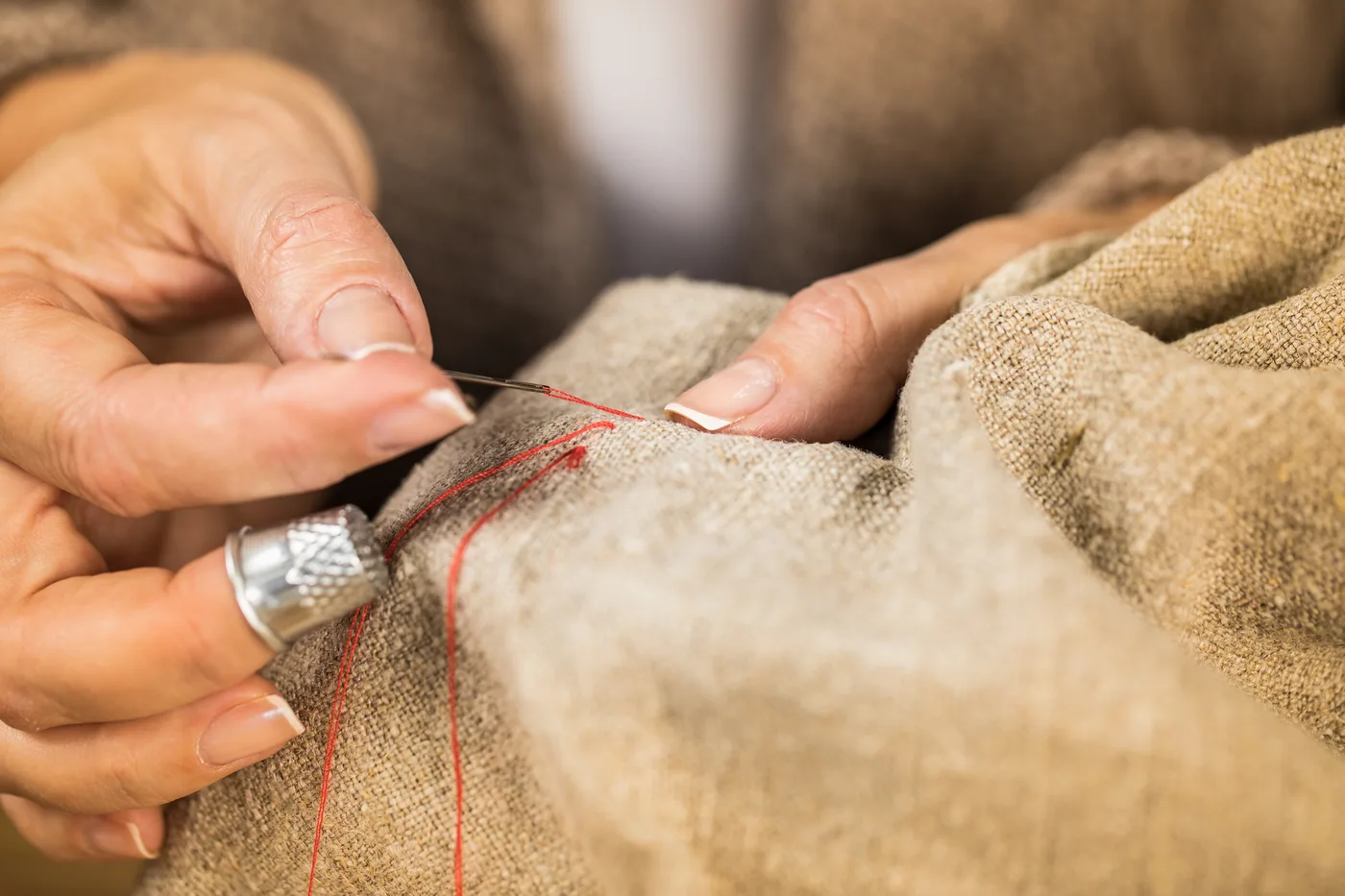
Somewhere in your home there is a drawer, or a closet shelf, where the broken things wait. The lamp with the loose switch, the sweater with the elbow going, the chair that wobbles just enough to be mentioned every time a guest sits down. You have not thrown these things away, which is telling. Some part of you knows they are not garbage. But you have not fixed them either, because somewhere in the last few decades fixing became the eccentric choice and replacing became the default, and it is worth asking what that reversal has quietly cost.
How Repair Became Strange
For most of human history, mending was not a virtue. It was simply what one did, because objects were expensive and labor was cheap. A torn shirt met a needle. A dull knife met a stone. Every village had its fixers, and every household had a working knowledge of its own possessions: how the clock came apart, where the chair joint took its glue. Repair was not sentimental. It was arithmetic.
The arithmetic flipped within living memory. Objects became cheap and time became the expensive thing, and a generation of products arrived that were sealed, glued, and priced to make the repair cost more than the replacement. The skills went quiet because the economy stopped asking for them. None of this was a moral failure on anyone's part. But something traveled along with the change that nobody voted for: our relationship to the things we live with became provisional. Why learn the ways of an object that is, in effect, already on its way out?
The interesting thing is what happens inside a person who reverses this, even once, even badly. Because it turns out repair was never only about the object.
What Fixing Does to the Fixer
Mend something, anything, and a few things happen that replacement cannot deliver.
The first is attention. You cannot repair a thing without finally looking at it. The sweater must be turned in the light; the wobbling chair must be tipped over and examined at the joint. Most of our possessions live their whole lives with us unexamined, and the moment of repair is often the first time we actually see the thing we have handled a thousand times. This kind of looking is close kin to what the meditative traditions train, sustained attention to what is actually in front of you, except it arrives with a screwdriver instead of a cushion.
The second is competence, felt in the hands. There is a specific satisfaction in a switch that clicks again because you made it click, and it is not the same satisfaction as a successful purchase. Psychologists who study wellbeing keep finding that felt competence sits near the center of it: human beings are happier when they experience themselves as capable of affecting the world. A repair is a small, undeniable proof of agency, available on a Saturday morning, and its size is not the point. The proof is the point.
The third is the change in the object itself. A thing you have mended is no longer generic. It has a history now, and you are in it. The Japanese practice of repairing broken pottery with visible seams of gold made this into philosophy: the break and the mend become part of the object's story rather than a shame to be hidden, and the repaired bowl is held to be more itself, not less. You do not need the gold. A darn in a sock does the same quiet work. The mended thing becomes yours in a way the newly purchased thing has not yet earned.
The Deeper Habit
Live this way for a while and the instinct starts to generalize, which is where it gets genuinely interesting. Repair is a stance: this thing has value, the damage is real, and the damage is not the end of the story. Practice that stance on lamps and hems and it becomes easier to take toward larger things. A friendship that has gone quiet. A garden bed gone to weeds. A skill you let rust. The culture of replacement whispers the same advice about all of them, that it is easier to start fresh than to mend, and it is sometimes right. But it is right far less often than it claims, and a person with the repair instinct has a way of knowing the difference: they look closely first. That is the whole method. The fixer's first move is always to actually examine the break before deciding what it needs.
There is also, for anyone trying to live more lightly, the plain material fact: the most sustainable object is almost always the one already in your house. Manufacturing what replaces it, shipping it, and burying the original all carry costs that no recycling bin undoes. Repair is the rare environmental act that saves money instead of spending it.
Beginning Badly
The practice, then, for this week. Go to the drawer. Take out one thing, the simplest one, and give it an honest half hour.
Start by looking. Turn the object over. Find how it was meant to work and where exactly it stopped. Half of all repairs are solved in this stage, because the fault is a loose screw or a worn washer that only needed to be seen.
Let yourself be taught. The knowledge that used to live in the village fixer now lives in videos and forums maintained by people who love explaining exactly your lamp. Some towns, including a growing number on Long Island, host repair cafés where volunteers will sit with you and your broken toaster for the pleasure of it. Asking is part of the tradition, not a failure of it.
Accept the amateur result. Your darn will be visible. Your glue line will show. This is not the flaw in the practice; as the gold-seamed pottery has been saying for centuries, it is the practice. A visible mend is a record of care, and care is the thing the whole exercise is for. Know your limits, too: anything involving mains wiring, gas, or brakes belongs with a professional, and knowing that is also part of the skill.
Then notice what you feel when you use the thing. The click of the switch. The chair that holds still. It is a small feeling, but it is load-bearing, and it points somewhere. In a world that would prefer you to be a consumer of finished things, mending is a modest declaration that you are not done being a maker of them. The drawer of broken things turns out to be a drawer of invitations. It only ever needed one accepted.



Loading comments…